
Small Pool Installation in Salisbury Mills, NY: Timeline From Design to Swim-Ready
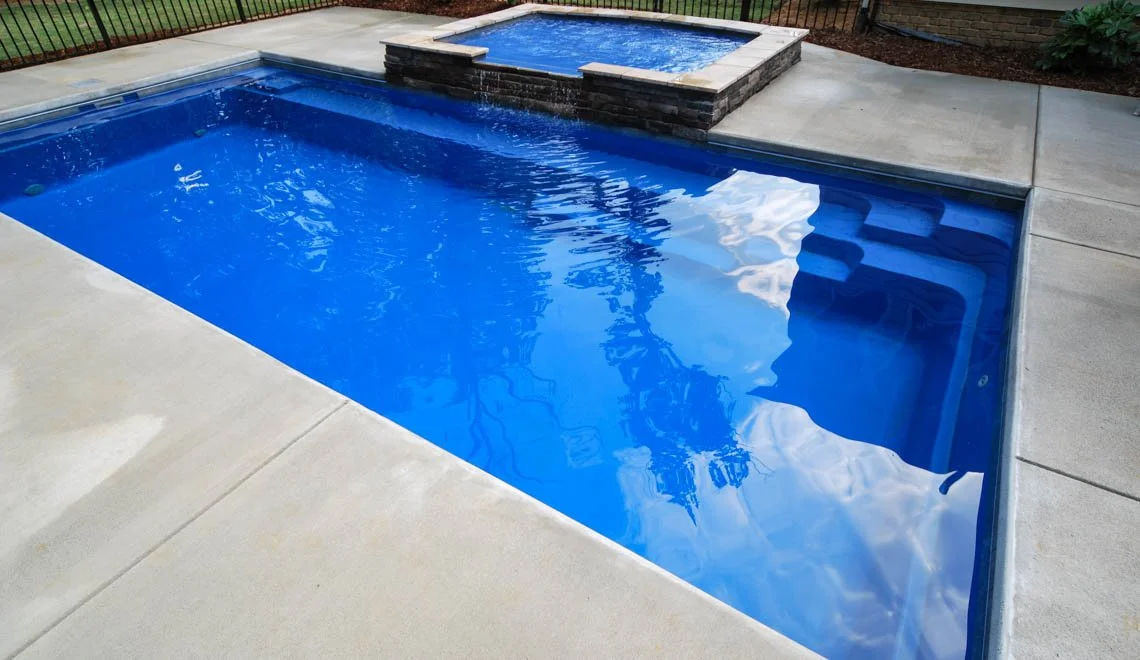
A homeowner planning a small pool installation in Salisbury Mills, NY usually wants to know one thing above all else: how long until it's actually ready to swim in. A smaller footprint often suggests a faster project, but timeline depends on far more than pool size alone, from permitting turnaround to how a property's access and soil conditions affect excavation.
Albert Group Pools & Patios has installed fiberglass pools across Orange, Dutchess, Sullivan, Ulster, and Westchester counties since 2005, with founder Jamie Albert Snyder designing swimming pools and landscapes since 1995.
That decades of hands-on project management shapes how the company sequences a small pool installation from initial design through the first swim of the season.
Related: Small Pool, Big Rituals: How Harrison, NY, Plunge Pool Designs Are Changing Weeknights at Home
How Long Does Small Pool Installation Actually Take From Start to Finish?
A small fiberglass pool installation typically runs six to ten weeks from the day design work begins to the day the pool is ready for water, though that window shifts based on permitting speed, weather, and how far in advance materials were ordered. This timeline breaks down into distinct phases: design and permitting, site preparation and excavation, pool placement and plumbing, backfill and equipment setup, and finally patio or decking work around the finished pool.
Smaller pools do move faster through excavation and placement than larger custom shapes, since less material needs to be moved and a smaller fiberglass shell handles more easily on site. That advantage narrows considerably once permitting and finishing work enter the picture, since those phases take roughly the same amount of time regardless of pool size in most cases.
Fiberglass pools hold a specific timeline advantage over other pool types. Because the shell arrives pre-manufactured rather than being built on-site like a gunite pool or lined like a vinyl pool, fiberglass installation skips weeks of on-site construction that other pool types require. A vinyl or concrete pool project of comparable size often runs several weeks longer than a fiberglass installation, since those methods depend on more extensive on-site labor before the pool holds water.
How Order Timing for the Fiberglass Shell Affects the Schedule
Albert Group partners with Leisure Pools for its fiberglass shells, and lead time on ordering a specific model and color affects how quickly a project moves from design approval into excavation. \
Ordering early in the process, ideally as soon as the design is finalized rather than waiting until permits clear, keeps the shell's delivery date aligned with when the site will actually be ready for it. A shell ordered late in the process sometimes becomes the bottleneck that determines the entire project's timeline, even when every other phase moves efficiently.
What Happens Before the Excavator Even Arrives?
Design and permitting occupy the first phase of any small pool project, and this stage often takes longer than homeowners expect relative to the physical construction that follows.
Albert Group works with homeowners to finalize pool shape, size, and placement on the property, accounting for setback requirements, septic system locations, utility lines, and how the pool will relate to existing patios or landscaping.
Permitting Timelines Vary by Municipality
Salisbury Mills and the surrounding Orange County towns each handle pool permitting through their own building department, and turnaround time varies from a couple of weeks to over a month depending on the municipality's current workload and how complete the initial application is.
A survey showing exact property lines, setback distances, and existing structures speeds up this process considerably, since incomplete applications get sent back for revision, adding real time to the schedule.
Homeowners planning a small pool installation for the coming summer benefit from starting the design and permitting process in late winter or very early spring, since permitting delays during the busy spring season frequently push a project's start date later than anticipated if the application process doesn't begin early enough.
Site Evaluation Shapes the Final Design
Before finalizing a design, Albert Group evaluates the property's soil conditions, drainage patterns, and access points, since a small backyard doesn't always mean simple access.
A pool positioned behind a house with a narrow side yard or limited driveway access often needs a different excavation approach than one with direct backyard access from the street, and this evaluation happens during design rather than being discovered once equipment shows up.
Soil conditions in the Hudson Valley vary considerably from property to property, and even neighboring lots sometimes present very different digging conditions.
A property with sandy, well-draining soil excavates faster and more predictably than one with heavy clay or significant subsurface rock, and Albert Group's familiarity with the region's geology, built over two decades of local projects, sets realistic expectations for excavation time before a contract is even signed.
What a Design Consultation Actually Covers
A design consultation for a small pool goes beyond picking a shape and color. Albert Group walks through how the pool will relate to the house, existing trees and landscaping, and any future plans a homeowner has for the yard, since a pool placed without considering a planned patio expansion or outdoor kitchen down the road often complicates that future project.
Septic system location matters significantly in Salisbury Mills and surrounding towns, where many properties run on private septic rather than municipal sewer, and pool placement has to respect required setback distances from the septic tank and leach field.
Utility locations, buried electrical, gas, or water lines, also factor into the final design. Albert Group coordinates with local utility marking services before finalizing placement, since discovering an unmarked line during excavation stops work entirely until the situation gets resolved, adding unplanned delay to a schedule that was otherwise on track.
How Long Does Excavation and Pool Placement Actually Take?
Once permits are approved, excavation for a small fiberglass pool typically takes one to two days, depending on soil conditions and how much material needs to be removed and hauled away. Rocky soil, common in parts of the Hudson Valley, sometimes extends excavation time if significant rock needs to be broken up or removed rather than simply dug through.
The pool shell itself arrives on a truck and gets set into the excavated hole using a crane, a process that, for a small pool, often takes place within a single day. This is one of the moments where fiberglass installation's speed advantage becomes most visible, since the shell arrives essentially finished rather than needing to be built in place.
Site Access Determines Crane Placement
A property with wide, clear access to the backyard allows a crane to position close to the excavation site, keeping the placement process straightforward.
Properties with narrow side yards, mature trees, or limited driveway clearance sometimes require a longer crane reach or, in more constrained cases, a different lifting approach entirely. Albert Group evaluates site access during the design phase specifically so the placement day doesn't run into surprises that weren't accounted for in the schedule.
In situations where standard crane access simply isn't available, whether due to overhead power lines, tight side yards between houses, or limited street clearance for a crane truck, alternative approaches like a smaller specialized crane or, in rare cases, careful manual placement come into play.
These situations extend both planning time and the placement day itself, which is why Albert Group flags access constraints during the initial site visit rather than waiting until the shell arrives on delivery day.
Plumbing and Initial Leveling Happen Immediately After Placement
Once the shell sits in the hole, the crew levels it precisely, since a pool that isn't level shows a visible water line difference once filled. Plumbing lines for the skimmer, returns, and any additional features get connected at this stage, before backfill material goes in around the shell to hold it in place and provide structural support against the surrounding soil.
Getting the level right at this stage matters more than almost any other single step in the process. A shell that settles slightly out of level during backfill, because the surrounding support wasn't distributed evenly, creates a problem that becomes far more difficult and expensive to correct once the pool is filled with water and the patio around it is finished.
Albert Group checks level repeatedly throughout the backfill process rather than relying on a single check immediately after placement.
Related: Can I build a Swimming Pool in a Small Yard?
What Finishing Work Happens After the Pool Shell Is Set?
Backfilling around the pool shell happens gradually and in coordination with adding water to the pool itself, since balancing water level inside the pool against backfill material outside prevents the shell from shifting or cracking under uneven pressure. This phase typically takes a few days, moving slower than excavation or placement specifically because of that careful balancing process.
The material used for backfill matters as much as the timing. Albert Group typically uses a specific aggregate that compacts well without shifting over time, rather than reusing native soil that often doesn't provide consistent support around the shell's contours.
Getting this material choice right protects against the kind of gradual settling that affects a pool's structural performance years down the road, well after the original installation crew has moved on to other projects.
Equipment Installation and Electrical Work
Pool equipment, the filter, pump, and any heater or automation system, gets installed and connected during this phase, along with the electrical work required to run it safely. This work typically overlaps with backfilling, since the equipment pad location was already determined during design and doesn't depend on the pool being fully backfilled first.
A licensed electrician handles the electrical connections for pool equipment, since this work involves both standard electrical code and pool-specific safety requirements around bonding and grounding near water.
Albert Group coordinates this scheduling directly rather than leaving a homeowner to separately hire and schedule an electrician, which keeps this phase moving in step with the rest of the installation instead of becoming a separate bottleneck.
Patio and Decking Work Adds the Most Variable Time
The area immediately surrounding a small pool, whether a simple concrete patio or a more elaborate paver design with retaining walls and lighting, adds the most schedule variability of any phase. A basic surround finishes in about a week, while a more extensive hardscape project incorporating multiple materials, elevation changes, or additional features like a small outdoor kitchen extends the overall project timeline by several additional weeks.
Albert Group's ICPI-certified paver installation and NCMA-certified retaining wall construction mean this phase, however extensive, gets built to the same durability standards as the pool installation itself.
For a small pool specifically, the patio and surrounding hardscape often ends up mattering more to the finished look than it would on a larger pool, since a compact pool footprint puts more visual weight on how the surrounding space is designed.
Homeowners planning a small pool sometimes underestimate how much this phase contributes to the final timeline, focusing their planning attention on the pool itself when the patio design deserves equal consideration from the start.
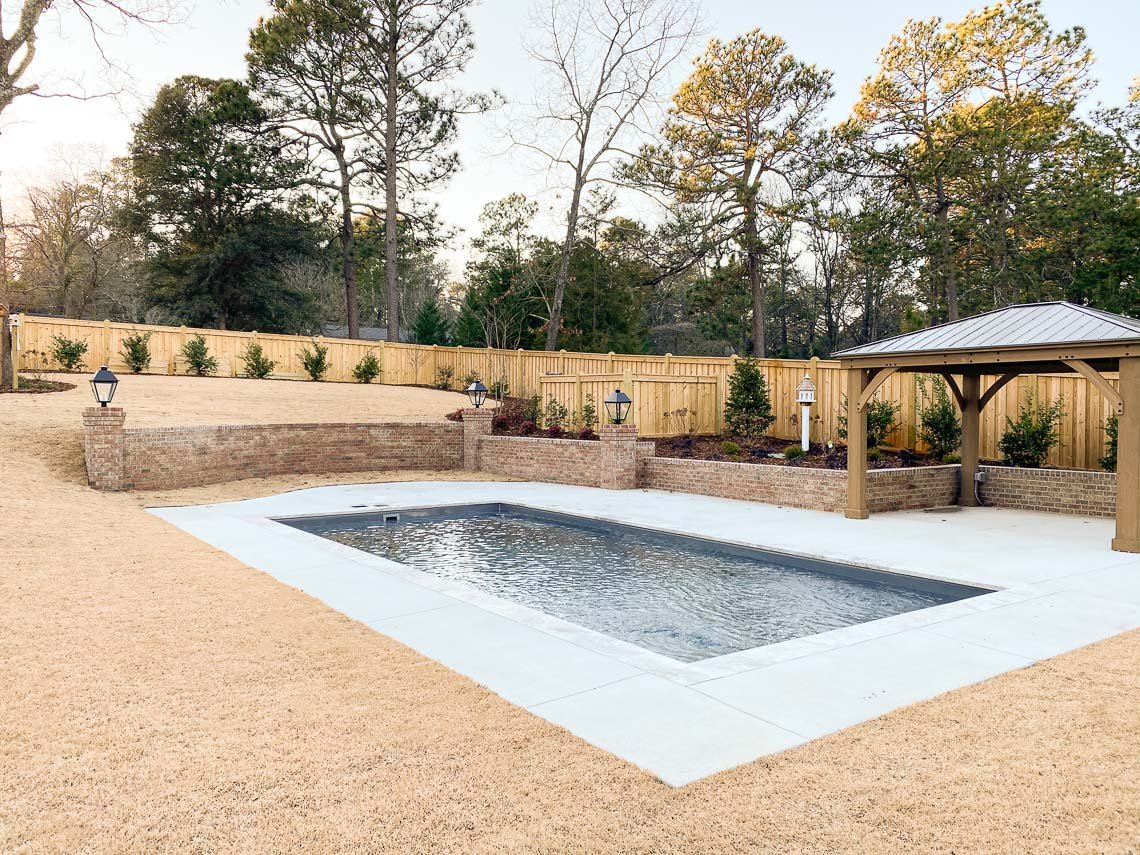
When Is a New Small Pool Actually Ready to Swim In?
Once backfill, equipment installation, and any patio work are complete, the pool needs to be filled with water and the chemical balance established before it's genuinely ready for swimming.
Filling a small pool typically takes a day or two depending on water source and pool size, and initial water chemistry, pH, alkalinity, and sanitizer levels, needs a few days to stabilize once filling is complete and the equipment starts circulating and treating the water.
Why Initial Water Balancing Takes Patience
A freshly filled pool rarely arrives at proper chemical balance on the first test. Fill water itself carries its own mineral content and pH depending on the source, whether municipal water or a private well common throughout the Salisbury Mills area, and that starting point needs adjustment before sanitizer levels stabilize correctly. Rushing this process by adding large quantities of chemicals all at once, rather than adjusting gradually and retesting, often creates a worse imbalance than starting patiently.
Albert Group typically recommends daily testing during this initial stabilization window, tapering to the pool's normal maintenance schedule once levels hold steady for several consecutive days.
Weather and Seasonal Timing Affect the Final Stretch
A small pool installation completed in late spring reaches swim-ready status faster in practical terms, since warmer weather brings water temperature into a comfortable range more quickly than a pool filled during a cooler stretch.
Homeowners planning a pool specifically for early summer use benefit from starting the design and permitting process well before spring, given how permitting timelines and seasonal contractor demand both tend to compress available scheduling closer to peak season.
Fall installations, while less common for immediate swimming, let the pool and surrounding patio work sit finished and ready through winter, positioning the property for swimming as soon as the following season's temperatures allow, without the compressed spring scheduling that comes with starting a project right before peak swim season.
A pool installed and winterized in the fall also gives backfill material and any surrounding hardscape a full off-season to settle before the pool sees its first summer of regular use.
Start Your Small Pool Installation Timeline in Salisbury Mills, NY
A small pool moves through installation faster than a larger custom build, but the full timeline still depends on permitting speed, site access, and how much finishing work surrounds the pool itself.
Working with a team that plans for those variables from the design phase onward keeps a project on track instead of running into avoidable delays.
Schedule a Small Pool Installation Consultation with Albert Group Pools & Patios to map out a realistic timeline for your Salisbury Mills backyard.
About the Author
Our company started with a simple idea: Treat people the way we’d like to be treated. Provide choices, be up-front with pricing, and give them quality features in their landscape. More than 15 years and hundreds of satisfied customers later, we continue to make good on this commitment. Pool technology has changed tremendously, opening up the possibilities for what type of pool you can have and the stonework surrounds—and all the elements that can go along with it. This has made installing great poolscapes even more enjoyable for our crew.